You settle the cabin account at the end of the sailing, see a number that feels manageable, and assume that was “the vacation.” It wasn’t. The folio only shows what hit the ship’s system after you boarded. Flights, transfers, insurance, prepaid packages, and half your excursions never appear there—and the quiet daily charges that do appear rarely feel expensive until they stack.
This post is about when money breaks, not a full catalog of what to budget. For the categories most spreadsheets forget, see the cruise budget planner guide. For a deeper post-trip category view, see trip cost analytics in SeaDays. Here we stay on timing: pre-cruise lock-in, onboard drip, and port-day swing.
The folio lie: why final balance ≠ the real vacation cost

The folio is a settlement document, not a vacation P&L. It starts empty on embarkation and only accumulates shipboard charges—specialty dining, Wi‑Fi, drinks, spa, photos, casino, auto-gratuities, and anything else you swipe with your cabin card.
Everything you paid before you walked onto the gangway sits in airline apps, insurance emails, cruise-line “manage my booking” screens, and credit-card statements from months earlier. If you only watch the folio, you optimize the wrong half of the trip: you feel disciplined because a specialty dinner was “only” $45 (example—prices vary by line and night), while the prepaid drink package and two early-booked excursions already locked hundreds you stopped noticing.
Treat the folio as one timing bucket. The real cost is three stacks that peak at different moments.
Pre-cruise stack that locks before you board

This is the money that commits early—often weeks or months before sail day—and rarely shows up on the cabin account.
Typical lock-ins:
- Flights and hotels for embarkation/disembarkation buffers
- Transfers (airport–hotel–terminal vans, private cars, trains)
- Prepaid packages (beverage, Wi‑Fi, specialty dining bundles sold online)
- Travel insurance and trip-protection add-ons
- Excursions booked early through the line or third parties
- Deposits and final payments on the fare itself (already “done,” so people mentally exclude them)
The trap is psychological: once it’s prepaid, it feels settled. You stop counting it as vacation spend. Then onboard and port money stack on top of a bill you already forgot. First-timers especially get blindsided here—see first-time cruise mistakes that cost money.
Rule of thumb for this stack: if you could cancel tomorrow and still lose money, it belongs in the pre-cruise column—even if it never touches the folio.
Onboard stack that feels small daily

Onboard spend is death by familiarity. One specialty dinner. One photo package teaser. One “just tonight” cocktail flight. Spa walk-by specials. Casino markers that feel like entertainment, not budget. Wi‑Fi that you “need for work” for three more days.
None of these feel like a blow-up in the moment. They feel like vacation. The folio grows in quiet overnight updates while you’re at the show. By day five, the running total looks different than the sum of the little yeses you remember saying.
Drink creep deserves a timing note, not a full package lecture: prepaid packages lock cost before you board; à la carte drips during sea days and evenings. Which timing wins depends on your habits—run the numbers with the cruise drink calculator before you treat either path as automatic.
Onboard stack is where people who “don’t spend much” still leave with a surprise: not because any single charge was wild, but because daily friction was low and the cabin card was frictionless.
Port-day swing spending

Port days are the wild card. Cash vanishes faster than shipboard swipes because the receipts are messier: ATMs with cruise-adjacent fees, taxis without meters you trust, “just this one” shore tours sold on the pier, lunch that was supposed to be cheap, shopping that wasn’t on the plan.
Swing spending is timing-sensitive in a different way. You might have a calm sea-day folio, then two busy ports erase the discipline. Or you prepaid ship excursions (pre-cruise lock) and still tip guides, buy water, and grab taxis in cash (port swing).
Practical habit: before you leave the ship, decide a port cash/card cap for the day—not a vibe, a number. Port days blow up when the plan is “we’ll see.”
A simple split rule: % pre-cruise vs onboard vs port

You don’t need a perfect model. You need a rough allocation so one bucket doesn’t silently eat the others.
Example ranges only—not guarantees (label your own sailing; itinerary, line, and habits move these a lot):
- Pre-cruise (ex-fare): roughly 40–60% of non-fare vacation spend for fly-in trips with insurance + early excursions + prepaid Wi‑Fi/drinks
- Onboard: roughly 25–40% when specialty dining, photos, spa, and drink drip are in play
- Port days: roughly 15–30% on itineraries with several active ports and independent touring
A short Caribbean sailing with heavy prepaid packages can skew pre-cruise higher. A long Europe trip with walkable ports and light shipboard habits can push more into ports and less onboard. Use the ranges as a planning lens: if your pre-cruise column is already at the top of the band, onboard “treat yourself” nights need a harder cap—not more optimism.
If you only track the folio, you’ll always think onboard is the whole story. It isn’t.
Log the three stacks by timing
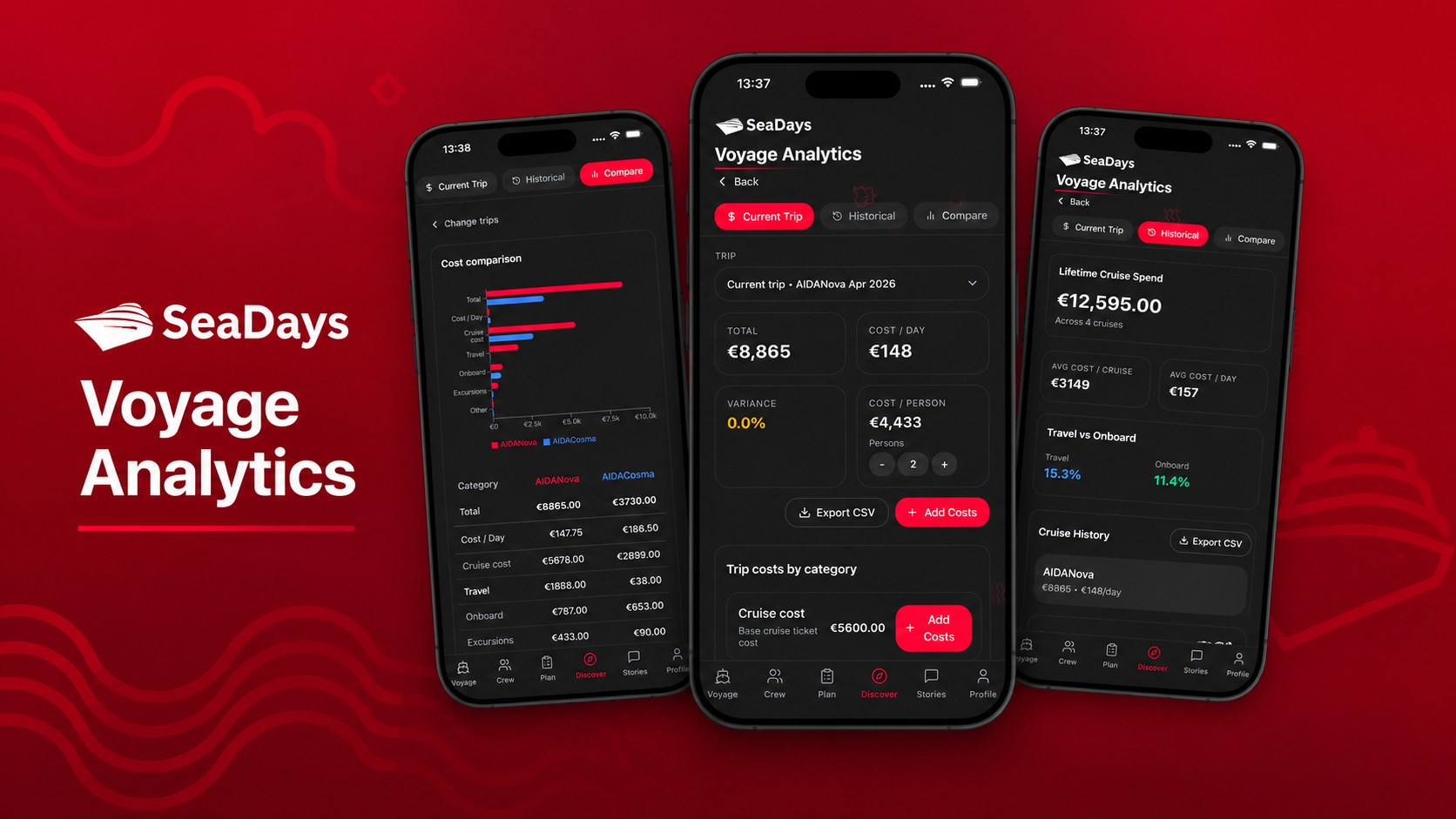
The fix is not a fiercer spreadsheet. It’s logging spend so pre-cruise lock-ins, onboard drips, and port swings stay visible in one place—even when only one of those stacks hits the folio.
In Voyage Analytics, log costs by category in the Analytics Hub (during the sailing or after from the folio). Map categories to the three timing stacks yourself: transfers/insurance/prepaid packages → pre-cruise; drinks/specialty/spa/photos/auto-gratuities → onboard; taxis/pier tours/ashore meals → port. The Hub shows category shape so you can see which stack actually blew up — not just the folio total. Some advanced analytics views sit on paid tiers; core category breakdowns remain available. Start from the cruise budget planner; for beverage prepaid vs drip, use the drink package calculator.
One pass after the trip—folio PDF plus credit-card statement for the cruise window—usually reveals which timing stack actually blew up.
Mistakes that make the timing worse

Prepaying everything “for peace of mind.” Peace is real; blank checks are not. Prepaid packages reduce decision fatigue but can lock you into a high floor. Prepay what you’ll definitely use (insurance, needed Wi‑Fi, must-do excursions with scarce spots). Leave optional indulgence flexible until you see how the sailing feels.
Ignoring gratuities in the timing map. Auto-gratuities often land on the folio late and feel like a final surprise even when they were always coming. Put them in the plan early—whether you prepaid a package that includes them or not—so embarkation week doesn’t absorb a fake “unexpected” charge.
Treating excursions as free because “vacation.” Early-booked tours are pre-cruise money. Pier tours and taxis are port swing. Neither is free just because you’re already on holiday. If the mental model is “the fare covered fun,” both stacks inflate.
FAQ

Should I prepay drinks?

Sometimes. Prepaying locks cost into the pre-cruise stack and removes daily drip anxiety. Paying as you go keeps the pre-cruise floor lower and puts risk into the onboard stack. The right call is break-even math for your daily habits and sailing length—not a universal rule. Use the drink calculator guide before embarkation pressure decides for you.
Is Wi‑Fi cheaper prepaid?

Prepaid Wi‑Fi is often priced below the onboard rate on many lines—check your sailing—but “cheaper” only matters if you’ll use it. A prepaid plan you barely open is just another lock-in. Decide based on work needs, streaming habits, and how many sea days you have—then put the cost in the pre-cruise column so it doesn’t masquerade as a mid-cruise surprise.