When “unlimited” still loses money

A beverage package can be a bad deal even when the marketing line sounds generous. The loss shows up when you prepaid for seven days of shipboard drinking but only behave like a heavy bar guest on two of them—or when your real consumption never reaches the break-even count your invoice assumed.
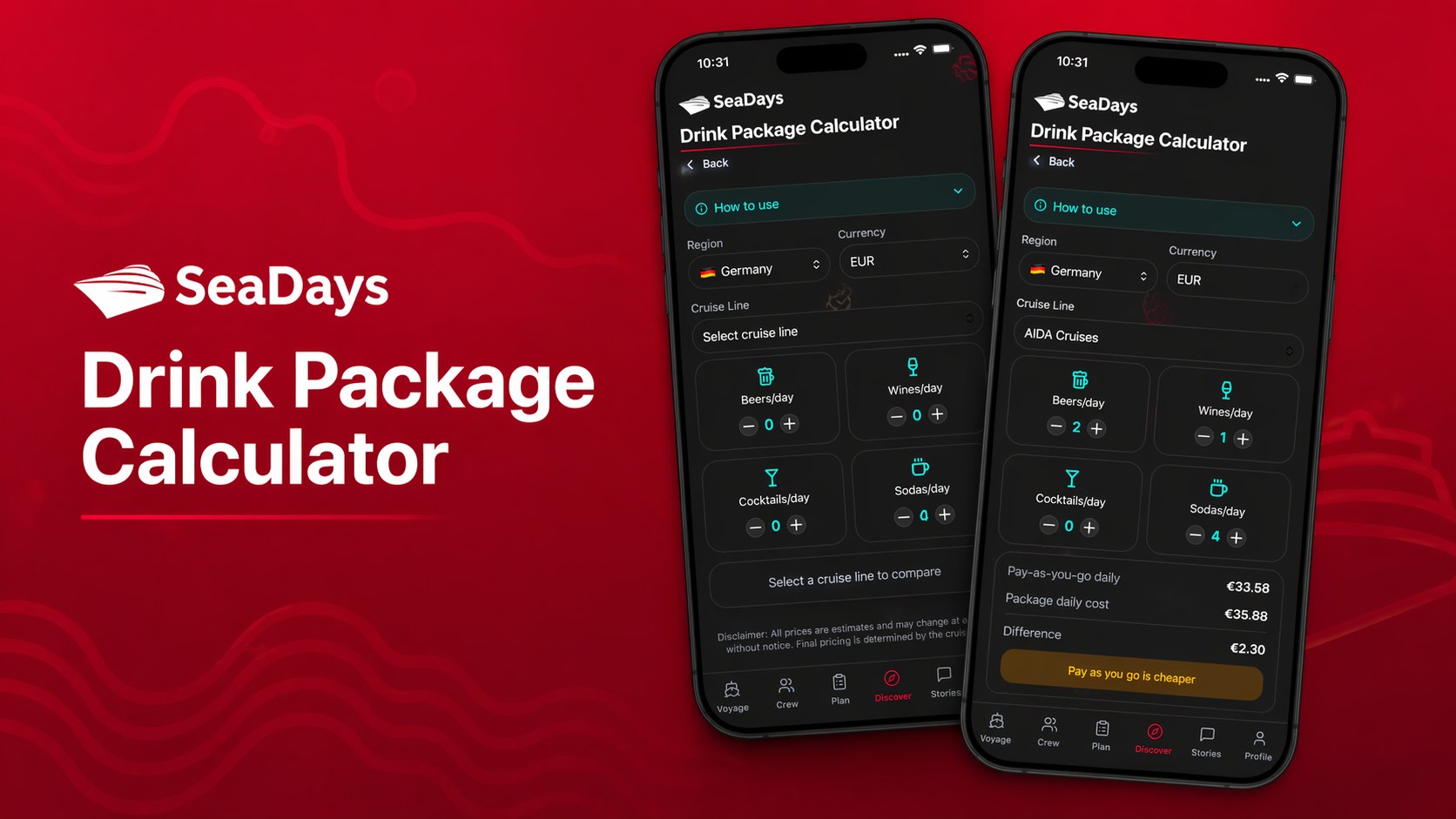
This article is about itinerary and habit: port-heavy weeks, light drinkers, mismatched cabin rules, and days when you simply are not on the ship long enough to use what you bought. For inclusion lists, and a pre-purchase checklist, read the real cost of cruise drink packages. For step-by-step break-even math, use SeaDays drink package calculator math or the drink package calculator.
Port days vs sea days
Drink packages charge by sailing day, not by “hours you felt like being at the pool bar.” On a port call you may leave the ship after breakfast and return near dinner. Beer with lunch in town, wine at a waterfront café, and a cocktail at the hotel bar do not count toward a shipboard package—you still paid for that day onboard.
Sea days concentrate consumption: brunch mimosas, afternoon pool drinks, pre-dinner cocktails, and late-show nightcaps can all happen without leaving the ship. A seven-night itinerary with five port days and two sea days behaves differently from a four-port, three-sea week even on the same line. Mediterranean and Northern Europe sailings often skew port-heavy; short Caribbean loops can skew the opposite. Match your estimate to the actual mix on your schedule, not to a generic “vacation day” guess.
Time actually spent aboard
Embarkation day is a partial day for you but often a full day on the package ledger. Disembarkation morning may end bar service early while the day still counts financially. Late port returns, tender delays, and “sleep in and miss lunch on the ship” days all reduce onboard orders without reducing the prepaid daily rate.
Excursion-heavy travel styles—long tours, independent days with tight all-aboard times, or multi-stop cities where you prioritize museums over pool time—produce lower onboard drink counts than a sailing where you treat the ship as the destination. Neither style is wrong; only one aligns with unlimited prepayment.
Drinking patterns that favor pay-as-you-go
Guests who order one glass of wine at dinner and little else rarely amortize a deluxe package. The same is true for mocktail-only evenings, shared bottles split across a table outside the package list, or specialty coffee drinkers when coffee is excluded from the tier they would be forced to buy under cabin rules.
Mixed households hurt when the line requires every adult to buy the same alcoholic plan. One person may hit break-even while two others subsidize unused days—that is a policy loss, not a math error. Age limits mean teens on soda plans while adults buy alcohol packages; still verify whether “one package per cabin” rules apply before you assume flexibility.
Practical loss scenarios (no sample tariff)
- Port-heavy week: You prepaid for seven days; you behave like a heavy bar guest on two sea days and drink ashore the rest. À la carte ship spend stays low while the package total stays fixed.
- Light habitual drinker: Your honest count is one beer and one wine most nights—below break-even on almost any published package once is included.
- Forced cabin purchase: Three adults must buy the plan; only one would have ordered enough covered drinks to justify it.
- Wrong tier: You bought deluxe for dinner wine but most pours you want sit above the package cap or outside included venues—package plus surcharges exceeds pay-as-you-go.
- Early disembarkation or missed days: Motion sickness, late boarding, or leaving the ship sick reduces consumption without a refund.
What to do instead
Run your sailing’s numbers before embarkation desk pressure—inputs and interpretation are in the calculator article linked above. If the delta is negative or barely positive, skip the package and track the first 48 hours with the Drink Tracker; cancel within your line’s window if you already bought and habits confirm the loss.
Consider a smaller bundle (soda, coffee, or beer-and-wine only) when that matches your list. Budget the rest in Voyage Analytics next to excursions and Wi-Fi so beverage spend stays visible even when you pay per drink.
Convenience has a price. If you buy the package knowing you will under-use it but want freedom from folio anxiety, that is a valid choice—just call it comfort spending, not savings.