
Assign responsibilities before anyone zips a suitcase
Group cruises fail at packing the same way they fail at shore-tour planning: everyone assumes someone else handled the shared gear. You do not need a new app to fix that—you need one conversation where each shared item gets a single owner before anyone shops or packs.
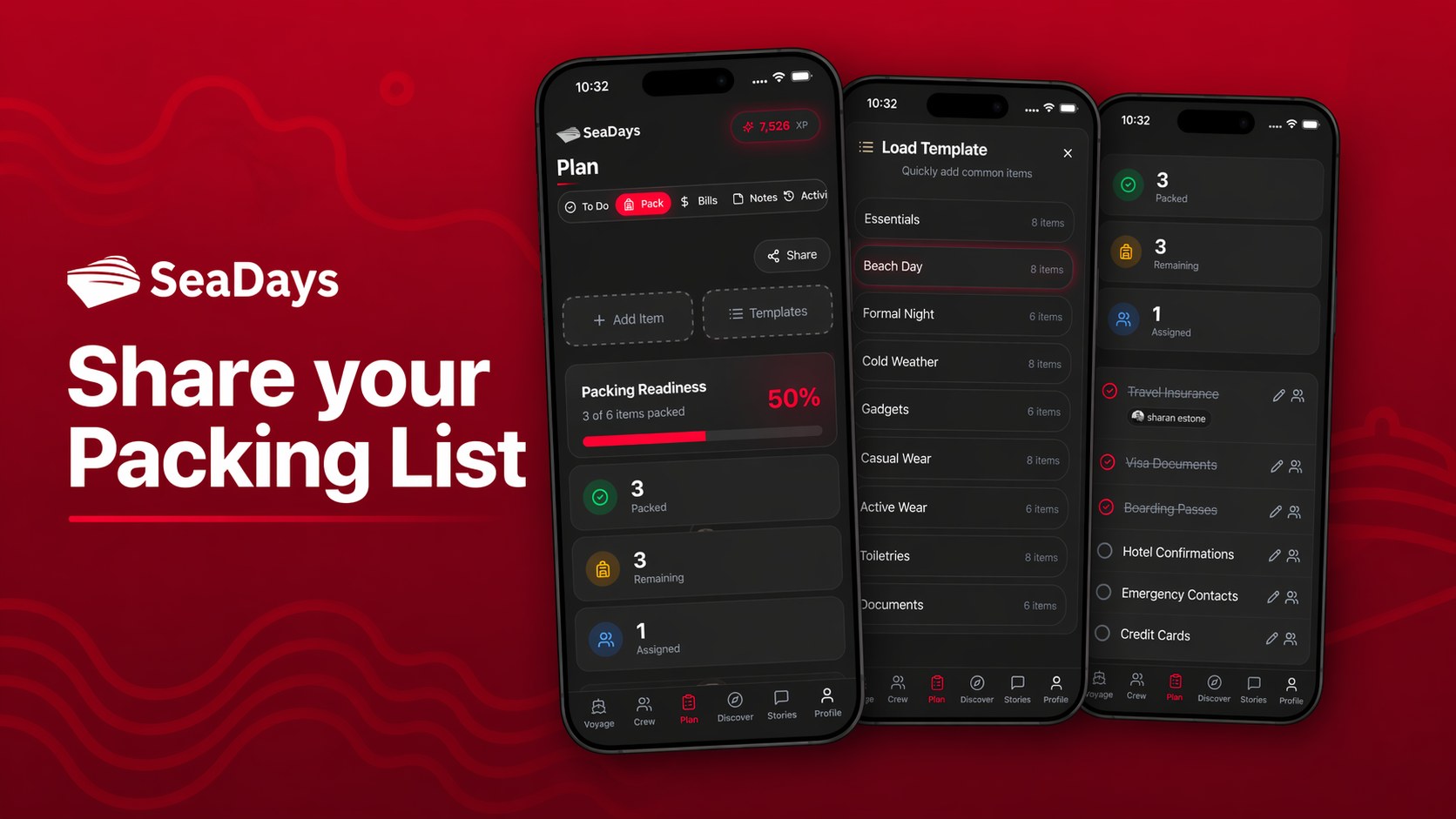
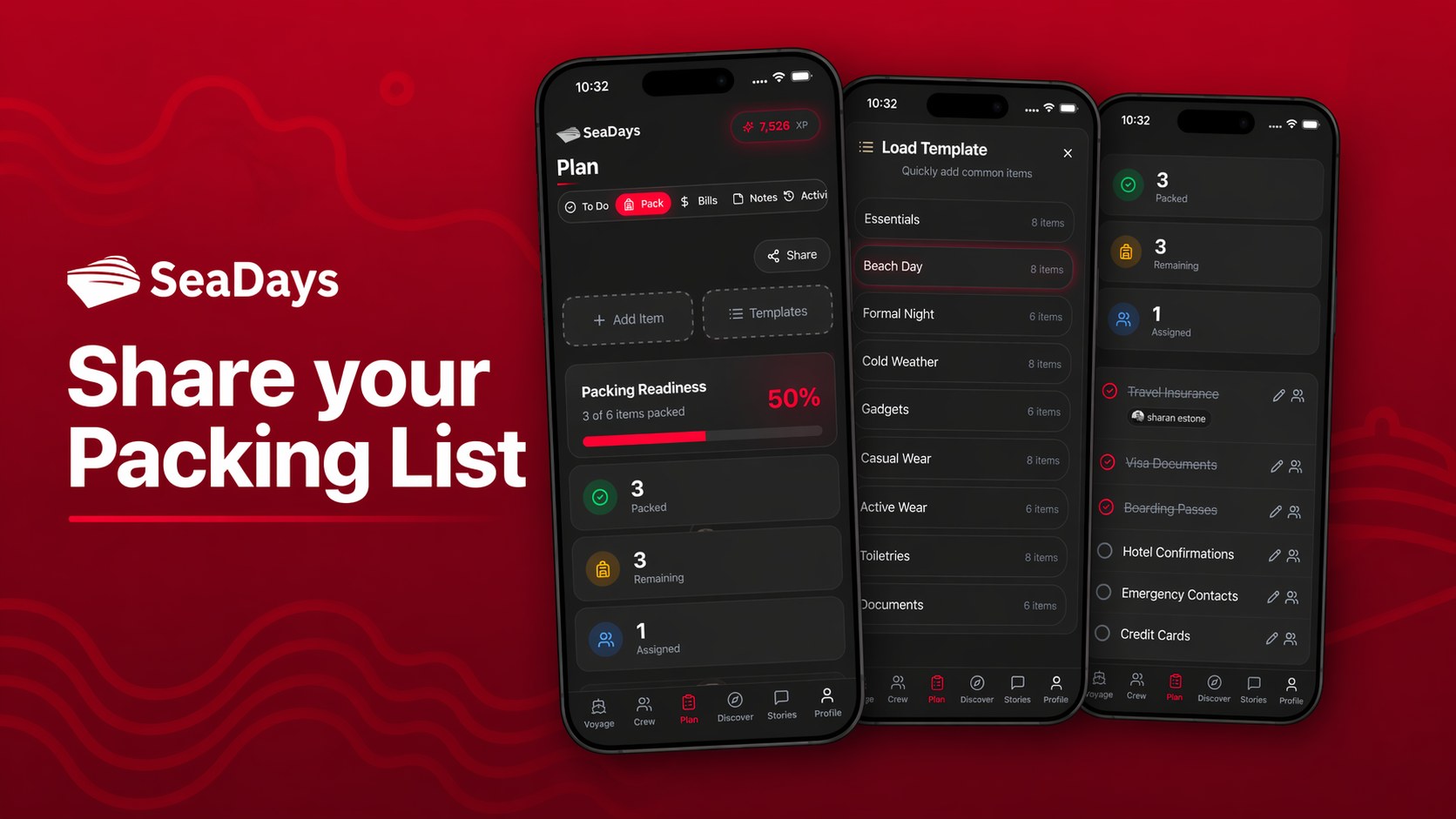
For the step-by-step workflow inside SeaDays Plan (templates, check-offs, and Crew sharing), read how to build a shared packing list in SeaDays Plan. This page stays on the assignment rules that make any list work.
Shared gear versus personal essentials
Personal items stay with the traveler who uses them: medications, passports, underwear, prescription glasses, and formal outfits sized to one person. Shared items need one owner even when two cabins split the cost: beach umbrella, group first-aid kit, card games, one tube of reef-safe sunscreen for the pool deck, or the portable dry bag everyone borrows on port days.
If an item lives in a shared cabin, still assign one name. “Our cabin has it” is how four chargers and zero seasickness patches happen.
One owner per shared purchase

Before anyone buys duplicates, walk these categories and pick a name for each line item your group will share:
- First-aid and seasickness supplies someone agreed to bring
- Beach and excursion gear (snorkel, float, walking poles)
- Entertainment or kids’ activities for sea days
- Laundry or cabin comfort extras you agreed to split
Unchecked “maybe someone packed it” items should not go in a suitcase until they have an owner on the list.
Electrical gear: follow your cruise line, not a packing blog
Do not treat a power strip, extension cord, multi-outlet USB hub, or travel adapter as default cruise packing. Lines differ on surge protection, watt limits, and what security confiscates at embarkation—and policies change.
Read your operator’s current prohibited-items list and electrical-accessory rules before you buy anything. This article does not grant permission for any specific device. If your line allows a particular accessory, one assigned owner should still bring it so the group is not carrying four of the same gadget.
Cabin versus group responsibilities
Inside a single cabin, couples often split “clothes versus gadgets.” Across linked cabins or family groups, decide whether power adapters, hangable laundry lines, or cabin fans are cabin gear or group gear. Mixing the two without labels is how duplicate purchases land in different staterooms.
Itinerary shapes the split: Alaska or northern Europe sailings push cold-weather layers to specific owners; warm-water loops push reef-safe sun protection and excursion footwear. Match assignments to ports you will actually walk, not a generic checklist.
Formal night and travel-day carry-on

Formal-night planning belongs in assignments, not vague “nice clothes” lines. List the exact outfit each adult owns (“navy suit + loafers,” “long dress + low heels”) so no one assumes a partner packed the tie or jewelry.
Travel-day carry-ons are always personal: medications, travel documents, phone chargers, and at least one change of clothes in case checked luggage misses the pier or arrives late to the cabin. Those items should never depend on a shared-owner rule.
Assignment checklist (use before shopping)

- Name one owner for every shared item on your list—no unassigned lines.
- Confirm formal-night outfits per person, not per cabin.
- Verify prohibited-items and electrical rules on your line’s site; do not pack banned gear “just in case.”
- Split personal carry-on essentials from shared checked gear.
- Re-read unchecked shared items four to five days before sailing so there is time to order missing pieces.
When you are ready to track assignments in an app, use the SeaDays Plan tutorial linked at the top—not the other way around.